 Skip to content
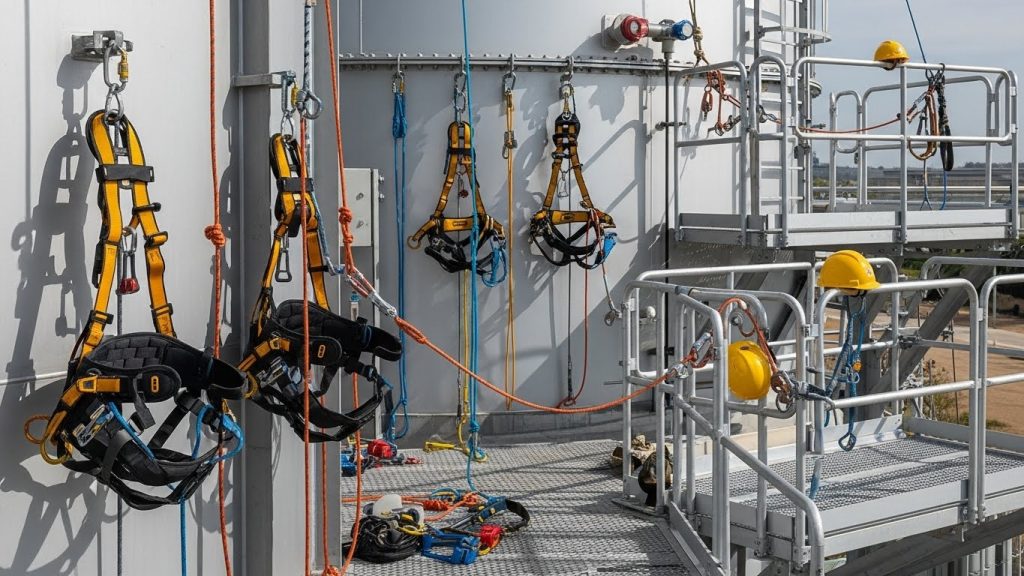
Anyone who has ever climbed a water tank or tower knows this work is not for the faint hearted. The height alone changes the way your body reacts. Every step feels heavier. Every shift of the wind feels sharper. This is why fall protection is not just a requirement. It is a lifeline!
Water tank and tower teams take on responsibilities that most people will never see up close, from navigating slippery surfaces after rainfall to maneuvering around tight corners during urgent repairs. What this really means is that every one of these workers deserves a safety environment that respects the risks they face.
Before you think about efficiency or deadlines, the priority should always be protection. When water tank fall protection systems are set up correctly, people feel safe enough to focus on delivering quality work. Without it, even a simple task can turn into a serious hazard.
This guide walks you through the essentials, the equipment, and the mindset needed to keep every worker secure from the moment they start the climb until they step safely back on the ground.
Understanding Why Comprehensive Fall Protection Matters for Water Tank Workers and Technicians Using Water Tank Fall Protection Systems at Extreme Heights
Let’s break it down. Working at height introduces a unique blend of risk and responsibility, especially when the structure you are climbing controls the water supply for entire communities. These systems cannot afford downtime. They cannot tolerate poor quality work.
And the people maintaining them cannot be placed in danger because of outdated or incomplete safety measures. That is where water tank fall protection systems become non-negotiable. They create the foundation for safe access, balanced movement, and confidence during tank inspections, painting, coating, repairs, and tower upgrades.
If you talk to any technician about what makes their work difficult, they will tell you that tower inspection challenges are real. Uneven steps, sudden weather changes, and narrow upper platforms introduce countless variables.
Height safety demands more than a simple harness clipped to a rope. You need the full combination of safety systems working together. That includes reliable safety lines, stable guardrails, well placed anchor points, personal protective equipment that fits the job, and fall arrest technology that reacts fast when something goes wrong.
This is also where ongoing training becomes just as important as the equipment itself. Anyone climbing a tank or tower needs to understand how their gear works, how to maintain it, and how to respond if a fall risk appears. The right mindset often prevents accidents before they happen.
How Fall Protection Equipment Works to Keep Workers Secure with Water Tank Fall Protection Systems During Tower Repairs Inspections and Structural Maintenance
Think of fall protection equipment as the safety language the entire team speaks while working at height. Every part has a specific job. A safety harness keeps the worker connected. Safety lines allow controlled movement. Anchor points create trust in every step. Each component plays a role and when everything is used together correctly, the system feels strong and dependable.
For tower work fall protection planning, nothing matters more than knowing your equipment can handle unpredictable conditions. Cold metal surfaces can reduce grip. Moisture can make platforms slippery. Strong winds can affect balance. Effective tank safety equipment is designed to counter these risks so the worker can carry out inspections, maintenance, or repainting with steady control.
The fall arrest system is usually the star of the show because it stops a fall in progress. But it should never stand alone. Strong guardrails make walking surfaces safer. Personal protective equipment shields workers from impact or debris. The key is creating a layered safety environment that supports the technician from the moment they begin their climb.
And yes, let’s not forget the legal responsibilities. Every piece of equipment and every safety step must align with OSHA safety requirements. Compliance is more than a rulebook. It is a commitment to sending workers home safe at the end of every shift.
Best Practices for Water Tank and Tower Workers Who Need Reliable Safety Systems to Prevent Height Related Accidents
Here is something professionals learn quickly. Equipment alone cannot guarantee safety. The real magic happens when good equipment meets good habits. Before climbing any tank or tower, workers should review their gear, check their safety harness for wear, test their safety lines, confirm anchor points, and review the environment for hazards. A small oversight has the power to turn into a serious incident.
When it comes to tower work fall protection routines, inspection and communication matter just as much as the climb. Teams should talk through the plan before anyone goes up. Everyone needs to know where they will anchor, how they will move, and what to expect. This reduces confusion and helps prevent risky decisions.
One more thing that often gets overlooked is the impact of confined spaces within tank structures. Some areas are tight, dark, and not ventilated well. Workers must be trained to manage confined space safety with proper lighting, monitoring, and communication. It is all connected. If a confined space slows your movement, your fall protection system must be even more reliable.
Height safety also depends on maintenance. Safety systems require routine checks. Anchor points need periodic assessment. Safety lines should be replaced when worn. Personal protective equipment must be fitted correctly and in good condition. Consistency in these habits is what keeps accidents rare.
Choosing The Right Water Tank Fall Protection Systems That Match the Needs of Your Team and Structure
No two tanks or towers are built exactly the same. Some structures have external ladders while others rely on interior access. Some have platforms at multiple levels. Some are older, which means anchor points or guardrails must be reinforced. Choosing the right water tank fall protection systems requires understanding these differences.
Start by assessing the structure. Identify height risks, surface textures, slippery zones, weak anchor areas, and potential obstructions. Once you understand the environment, selecting the correct equipment becomes easier. You might need vertical safety lines for long climbs. You might need upgraded guardrails for open walkways. You might need mobile anchor points when fixed ones are limited.
Investing in high quality tank safety equipment is not just about compliance. It builds confidence in every worker who steps onto the structure. When a technician trusts their safety systems, they perform better, move smarter, and work with fewer interruptions.
Remember that tower inspection challenges vary between seasons as well. What worked in the summer may not be ideal during winter? This is why ongoing evaluation is key. As the structure ages and environmental conditions shift, your safety approach must evolve as well.
Why Ongoing Training Strengthens Safety Culture and Encourages Better Height Safety Decisions
Let’s be honest. Even the best equipment cannot protect someone who does not know how to use it. Training shapes instinct. It sharpens awareness. It teaches workers how to react quickly when an unexpected situation appears. Regular height safety sessions also help teams stay updated with industry standards and changing OSHA rules.
During training, workers learn the reasoning behind every clip, every anchor check, and every slow step along a high platform. They begin to understand that tower work fall protection is not a single technique. It is a collection of smart habits working together.
Training is also powerful because it builds trust. When a crew knows that everyone is equally committed to safety, teamwork improves. Communication becomes clear. People look out for one another instead of rushing through tasks. A strong safety culture does not happen by accident. It grows when management leads with intention and workers respond with respect for the risks involved.


